Online shopping in India is no longer limited to big cities and big brands. Shoppers from small towns now buy clothes, electronics, groceries and beauty products from their phones every day — and local businesses that sell online are reaching customers far beyond their own city. If you are planning an online store, this guide explains where the market is heading, which model suits you, the features that matter, what it costs in India and how to grow after launch.
Why now is the right time to sell online
- The market is growing fast: Bain & Company’s How India Shops Online 2026 report (with Flipkart) estimates that India’s e-retail GMV reached about US$65–66 billion in 2025, growing around 19–21%, and projects US$170–180 billion by 2030.
- Digital payments are the default: UPI processed about 228 billion transactions in 2025, according to Worldline’s annual digital payments review — paying online is now normal for almost every shopper.
- Delivery expectations are rising: the same Bain report notes that quick-commerce already contributes roughly 16–17% of e-commerce GMV. Customers expect fast delivery and clear tracking.
- Tier-2 and tier-3 India is buying: much of the new demand is coming from smaller cities, where a well-built regional brand can stand out.
Marketplace or your own website?
Marketplaces (Amazon, Flipkart, Meesho) give instant traffic, but you pay commissions, compete on price next to many sellers and don’t own the customer relationship. Your own website (D2C) lets you control your brand, pricing and customer data, run your own offers and build repeat buyers — but you need to bring traffic through SEO, social media and ads.
Most successful brands do both: use marketplaces for reach, and their own website for brand, margins and loyal customers.
Platform options: ready-made vs custom
- Hosted platforms (Shopify, Wix etc.): fast to launch and good for testing a few products, but monthly fees, app costs and limits on custom workflows add up.
- Open-source (WooCommerce, Magento/Adobe Commerce): flexible with a large ecosystem; needs good hosting, security updates and a reliable developer.
- Custom e-commerce (Laravel/Node + React/Flutter): best when you have unique needs — B2B pricing, multi-vendor marketplace, subscriptions, ERP/warehouse integration or a mobile app sharing the same backend.
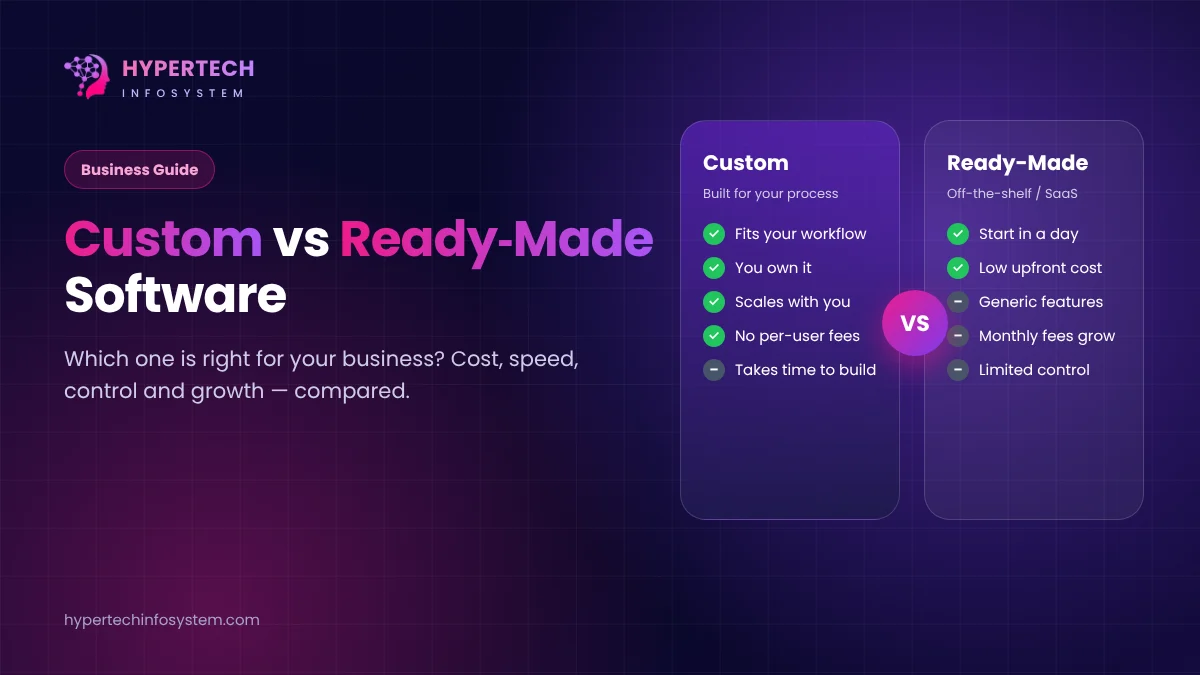
Not sure which way to go? Our comparison of custom vs ready-made software explains the trade-offs.
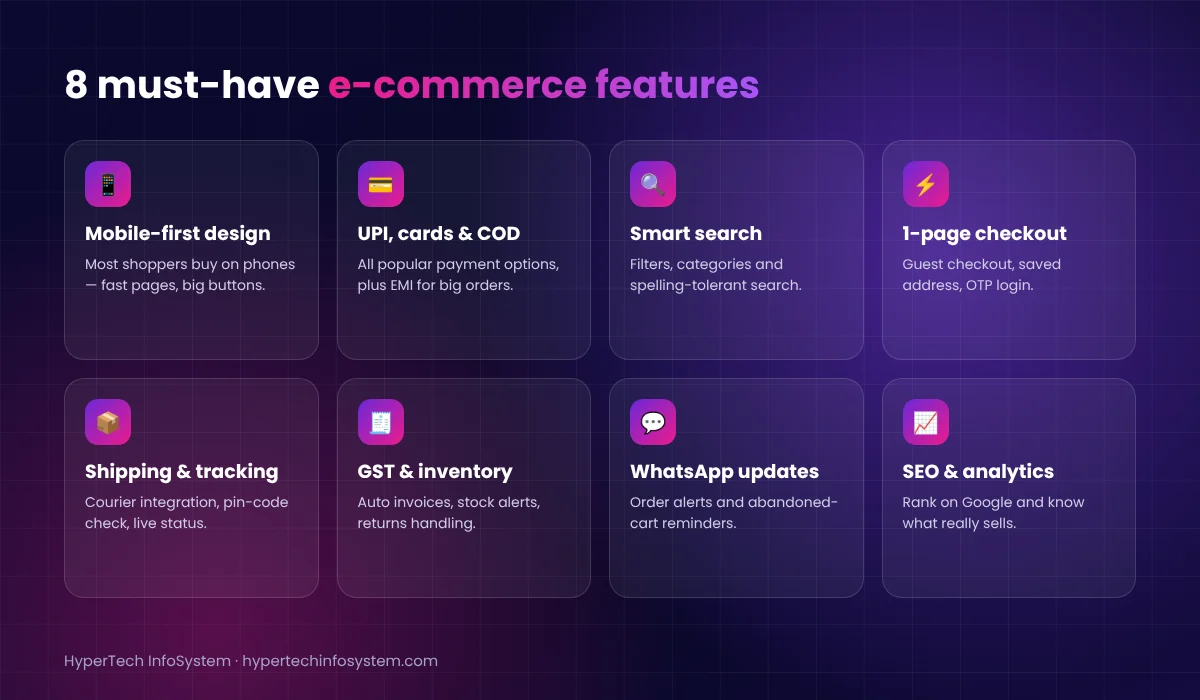
8 must-have features for an Indian online store
- Mobile-first, fast design — most orders come from smartphones, so pages must load quickly on 4G.
- All popular payments — UPI, cards, net banking, wallets, EMI and Cash on Delivery (with COD controls such as OTP confirmation or pin-code limits).
- Smart search and filters — size, colour, price, brand and spelling-tolerant search.
- Short checkout — guest checkout, OTP login, saved addresses and auto-filled pin codes.
- Shipping integration — courier aggregator, pin-code serviceability check, live tracking and easy returns.
- GST invoices and inventory — automatic tax invoices, stock alerts and sync with your billing software or warehouse.
- WhatsApp and SMS updates — order confirmation, dispatch alerts and abandoned-cart reminders.
- SEO and analytics — clean product URLs, schema markup, a sitemap and conversion tracking so you know what really sells.
How much does an e-commerce website cost in India?
These are indicative ranges; the final price depends on design, features and integrations.
- Starter store — approx. ₹40,000 to ₹1.2 lakh: up to a few hundred products, payment gateway, shipping, basic SEO and admin panel.
- Growth store — approx. ₹1.2 lakh to ₹4 lakh: custom design, advanced filters, coupons, reviews, WhatsApp alerts, courier and accounting integrations.
- Custom platform / marketplace — approx. ₹4 lakh to ₹15 lakh+: multi-vendor, B2B pricing, subscriptions, ERP integration and Android/iOS apps.
Also plan for running costs: hosting, domain, SSL, payment-gateway charges, courier fees, platform or plugin subscriptions, marketing and an annual maintenance plan.
How to grow sales after launch
- Great product pages: real photos, short videos, size guides and honest reviews.
- SEO and content: category pages and helpful blogs bring free traffic from Google over time.
- Reduce RTO: confirm COD orders, verify addresses and nudge customers toward prepaid payment with small offers.
- Bring buyers back: WhatsApp broadcasts, loyalty points and personalised recommendations.
- Use data: track conversion rate, average order value and repeat purchase rate every month.
- Automate support: an AI chatbot can answer “where is my order?” 24×7.
Build your online store with HyperTech InfoSystem
HyperTech InfoSystem builds e-commerce websites, multi-vendor marketplaces and shopping apps — with UPI and card payments, courier and GST integration, WhatsApp alerts and an easy admin panel. For payments and payouts, explore Stripaye. See our services and portfolio, or book a free consultation.
Frequently asked questions
How long does it take to build an e-commerce website?
A starter store usually takes 3–5 weeks. Custom stores and marketplaces with apps typically take 2–4 months.
Do I need a mobile app as well?
Start with a fast mobile website. Add an app once you have repeat customers — apps work best for loyalty, notifications and frequent buyers.
What do I need to start selling online in India?
Generally a registered business or proprietorship, a current bank account, GST registration (required for most online sellers), a payment gateway account and a return/refund policy. Check the exact requirements for your category with your CA.
Ready to take your business online? Book a free meeting — we’ll suggest the right platform, features and budget for your store.
Sources: Bain & Company and Flipkart, “How India Shops Online 2026” (April 2026); Worldline, “India Digital Payments Report – Year 2025 in Review”. Cost figures are indicative estimates by HyperTech InfoSystem.

0 Comments
No comments yet. Be the first to share your thoughts!
Leave a Comment
Your email will not be published. Comments appear after approval.