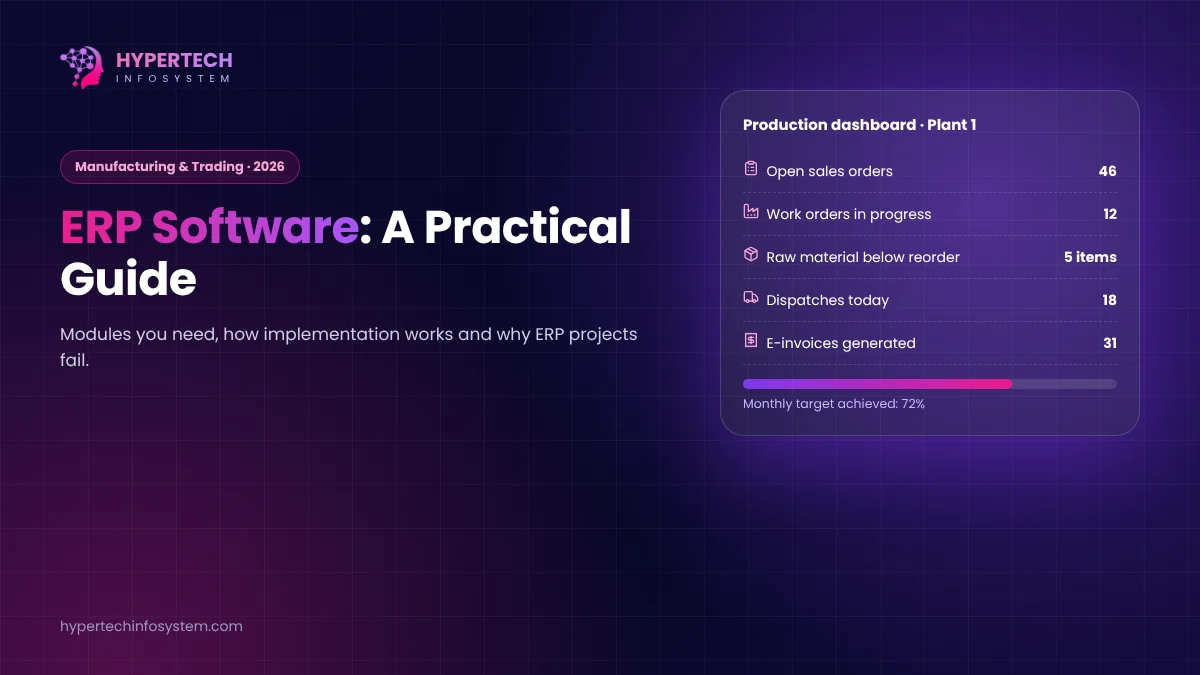
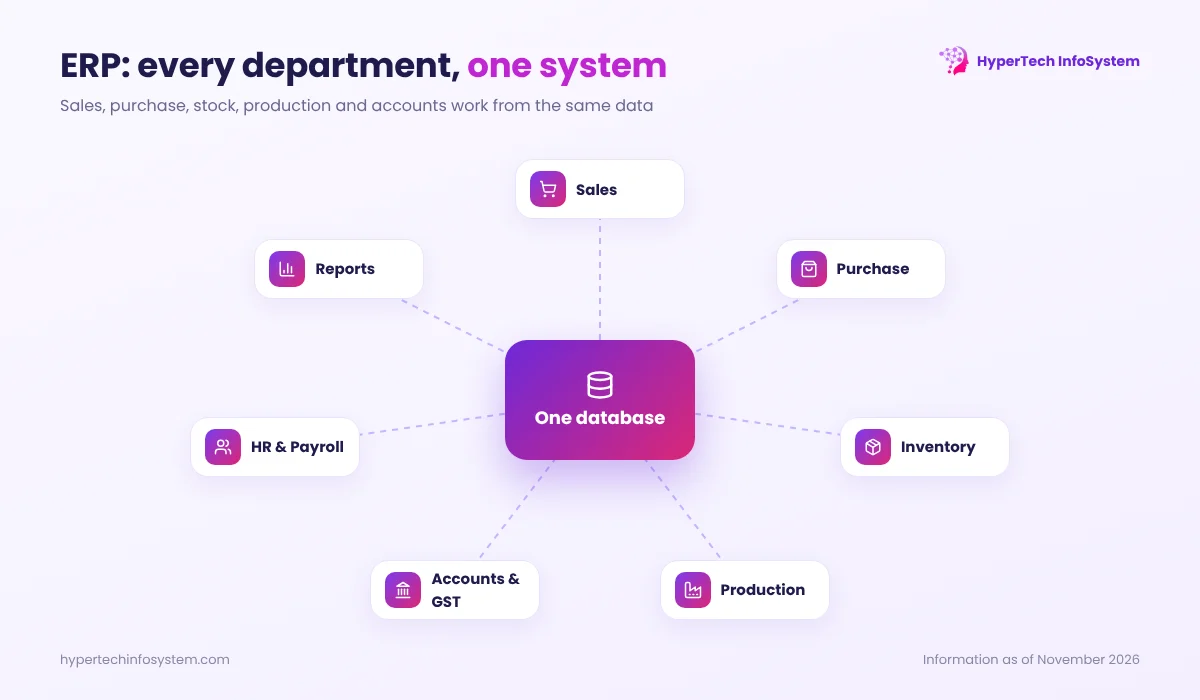
In a growing factory or distribution business, the same order passes through many hands: sales takes it, purchase buys raw material, the store issues it, production makes it, dispatch ships it and accounts raises the bill. When each team keeps its own register or spreadsheet, the numbers never quite match. An ERP (enterprise resource planning) system connects all of these steps in one database, so everyone works from the same truth.
Signs your business is ready for an ERP
- Stock in the system rarely matches stock on the shelf.
- You can’t say what a product really costs to make, including scrap and labour.
- Orders get delayed because nobody knew raw material was short.
- Month-end closing takes a week of reconciliation.
- You have more than one branch, warehouse or plant and no single view.
- Your accounting software has become a dumping ground for everything else.
Core ERP modules (and which ones you really need)
Sales and order management
Quotations, sales orders, delivery challans, invoices, returns and customer outstanding.
Purchase
Purchase requests, approvals, purchase orders, goods receipt (GRN) and vendor bills, with price history.
Inventory and warehouse
Multi-location stock, batch and serial numbers, reorder levels and stock valuation. This is usually where the quickest savings come from.
Production (for manufacturers)
Bill of materials (BOM), work orders, material issue, job work, scrap and finished goods entry. A good BOM is the base for real product costing.
Accounts and GST
Ledgers, receivables, payables and GST returns. Businesses with turnover above ₹5 crore must generate e-invoices for B2B sales, and those at ₹10 crore or more must report them within 30 days, so direct integration with the e-invoice portal and e-way bill system saves a lot of manual work.
HR and payroll (optional)
Attendance, shifts, salary and statutory deductions. Many companies start without it and add it later.
Reports and dashboards
Sales vs target, stock ageing, production efficiency, receivables ageing and profitability by product or customer.
Ready-made, customised or fully custom?
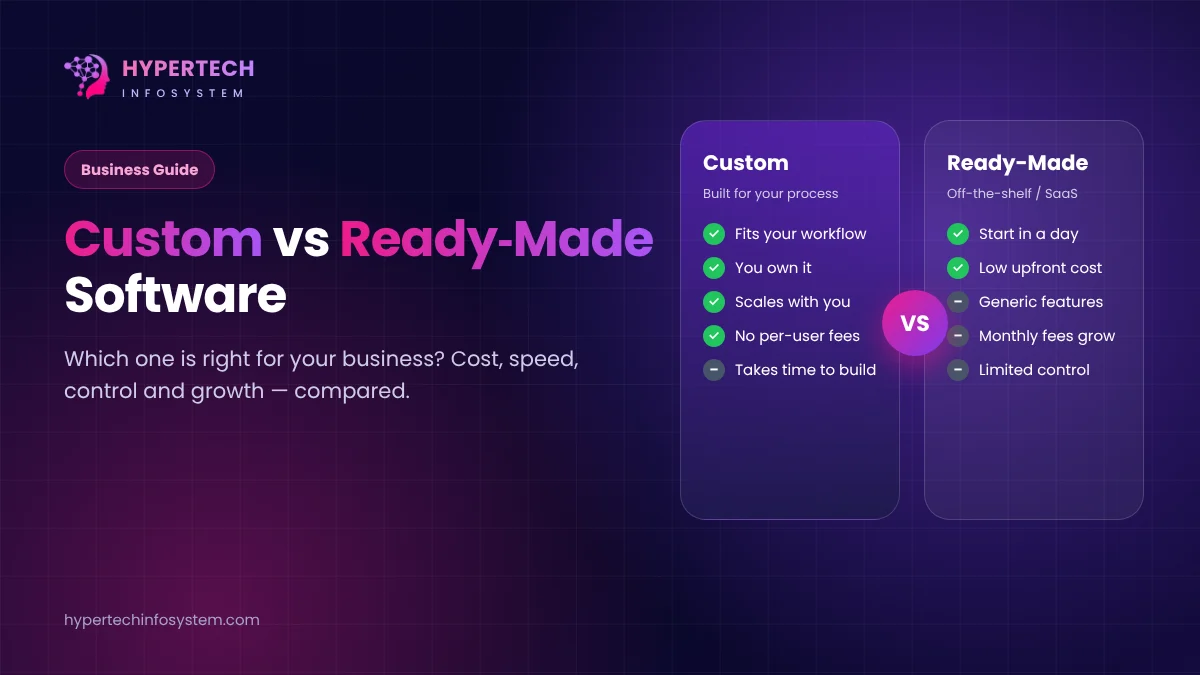
Ready-made ERPs (Tally with add-ons, Odoo, SAP Business One, ERPNext and others) work well when your processes are close to standard. Customised ERPs start from an existing platform and add your specific workflows. Fully custom ERPs suit businesses with unique processes, such as complex job work, made-to-order manufacturing or tight links with dealer apps, and they avoid per-user licence fees. The right choice depends on how unique your process is and how much you expect to change. We explain the trade-offs in custom vs ready-made software.
How an ERP implementation actually goes
- Process study: map how work flows today, department by department.
- Scope and phases: decide what goes live first. Inventory, sales and purchase are the usual first phase.
- Data cleanup: item masters, units, opening stock, customer and vendor data. This is the most underestimated step.
- Configuration or development, with regular demos to the people who will use it.
- Testing with real transactions from last month.
- Training and go-live, ideally at the start of a month or quarter, with close support for the first few weeks.
Why ERP projects fail, and how to avoid it
- No owner inside the company. Appoint one person with authority to take decisions.
- Trying to do everything at once. Go live in phases.
- Dirty master data. Ten names for the same item will break every report.
- Copying old paperwork into new software instead of improving the process.
- Skipping training for store and shop-floor staff, the people who enter most of the data.
What drives the cost
Number of modules and users, the amount of custom workflow, integrations (e-invoice, e-way bill, weighbridge, barcode, dealer app), data migration effort, and hosting (cloud or on your own server). Ask vendors for a phase-wise quote and a clear annual support plan, not just a licence price.
Talk to us
HyperTech InfoSystem designs and builds ERPs for manufacturers, traders and distributors, from inventory and production to GST billing and dealer apps. Book a meeting and we’ll start with a short process study of your business.
Sources: CBIC Notification 10/2023-Central Tax (e-invoice threshold); GSTN advisory on 30-day IRP reporting for AATO ₹10 crore and above (from 1 April 2025).
0 Comments
No comments yet. Be the first to share your thoughts!
Leave a Comment
Your email will not be published. Comments appear after approval.